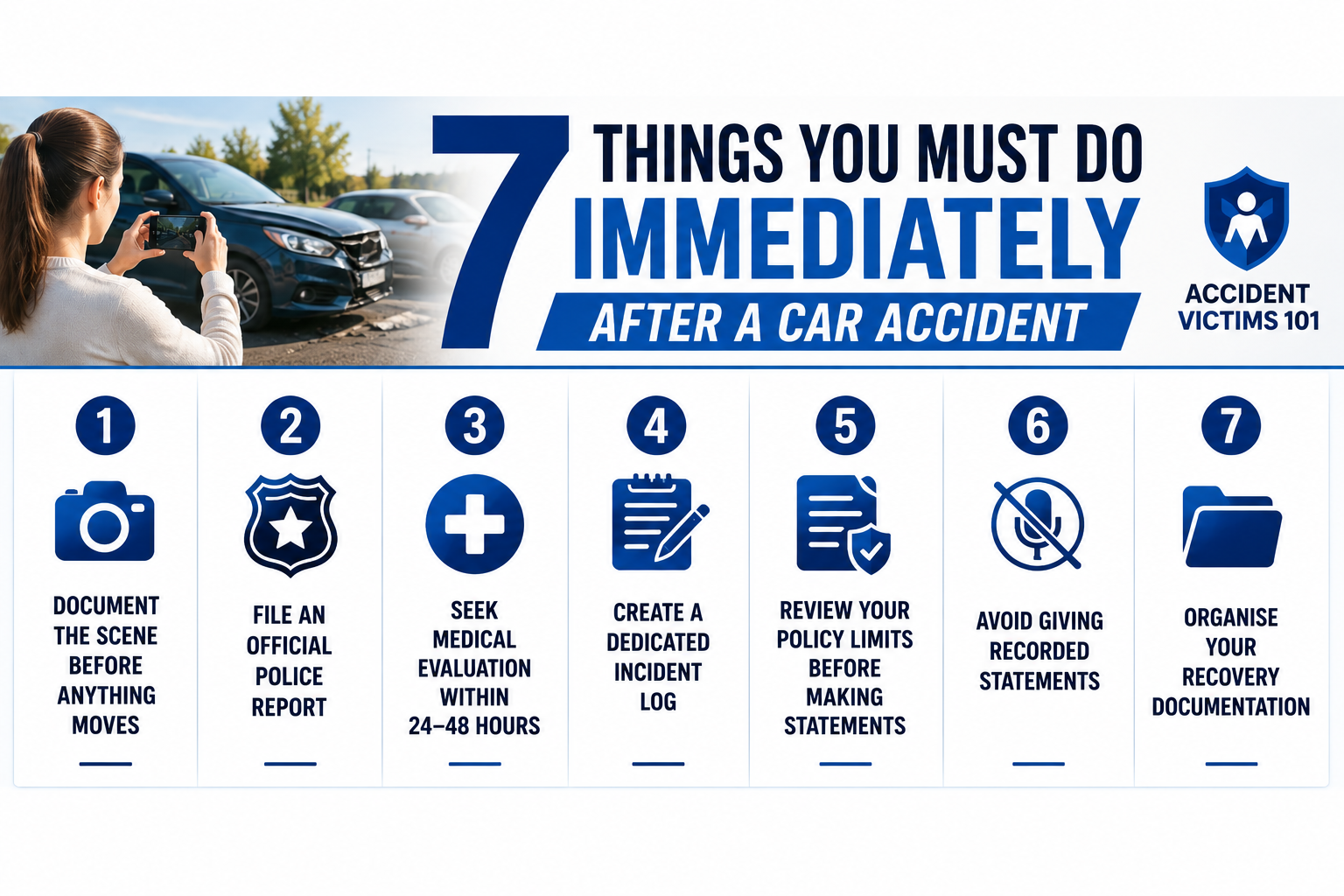
7 Things You Must Do Immediately After a Car Accident (Before Calling Insurance)
1. Document the Scene Before Anything Moves
If it is safe to do so, take detailed photos and videos before vehicles are cleared from the roadway.
Capture overall vehicle positioning, skid marks, road hazards, traffic signals, and weather conditions.
Take close-ups of all vehicular damage and visible physical injuries.
Get contact information from independent witnesses before they leave the scene.
2. File an Official Police Report
Never agree to settle things "privately" without law enforcement, even for minor fender benders. A neutral, third-party police report provides vital facts that insurance companies cannot easily dismiss later. Note the responding officer’s name and badge number so you can request a copy of the official report.
3. Seek Medical Evaluation Within 24–48 Hours
Adrenaline often masks severe soft-tissue injuries, concussions, or internal trauma. Delaying treatment gives insurance adjusters an excuse to argue that your injuries were pre-existing or unrelated to the accident. Visit an urgent care or your primary care physician immediately, and explicitly tell them you were in a motor vehicle collision.
4. Create a Dedicated Incident Log
Insurers rely on you forgetting fine details over time. Immediately start a private journal or digital folder tracking:
Daily pain levels and physical limitations.
Dates of medical appointments, treatments, and prescriptions.
Exact work hours or missed days of employment.
5. Review Your Policy Limits Before Making Statements
Before speaking to any adjuster, pull out your personal auto policy and know your coverage details—including Personal Injury Protection (PIP), Medical Payments (MedPay), and Uninsured/Underinsured Motorist limits. Knowing what you are entitled to prevents you from accidentally settling for less.
6. Avoid Giving Recorded Statements
Insurance representatives may call quickly asking for a "quick recorded statement to clear up details." You are not required to give a recorded statement on the spot. Request time to gather your facts, review your medical documentation, and write down a clear narrative before discussing the specifics.
7. Organise Your Recovery Documentation
The strongest insurance claims are built on meticulous organization. When you present structured, clear documentation of your losses, adjusters recognize that your case is prepared and far harder to undervalue.
Take Control of Your Recovery
Navigating insurance forms, medical documentation, and settlement claims doesn't have to be overwhelming.
Get step-by-step guidance: Access our comprehensive Critical Recovery Kit to download printable claim checklists, communication logs, and recovery resources designed to keep your claim organized from day one.
The minutes and days following a car crash are disorienting, but what you do in this window directly determines the outcome of your recovery and financial settlement. Insurance adjusters are trained to minimize payouts—and they often rely on victims making early, costly mistakes.
Before you pick up the phone to report the incident, make sure you have executed these seven essential steps to safeguard your health and protect your claim.
1. Document the Scene Before Anything Moves
If it is safe to do so, take detailed photos and videos before vehicles are cleared from the roadway.
Capture overall vehicle positioning, skid marks, road hazards, traffic signals, and weather conditions.
Take close-ups of all vehicular damage and visible physical injuries.
Get contact information from independent witnesses before they leave the scene.
2. File an Official Police Report
Never agree to settle things "privately" without law enforcement, even for minor fender benders. A neutral, third-party police report provides vital facts that insurance companies cannot easily dismiss later. Note the responding officer’s name and badge number so you can request a copy of the official report.
3. Seek Medical Evaluation Within 24–48 Hours
Adrenaline often masks severe soft-tissue injuries, concussions, or internal trauma. Delaying treatment gives insurance adjusters an excuse to argue that your injuries were pre-existing or unrelated to the accident. Visit an urgent care or your primary care physician immediately, and explicitly tell them you were in a motor vehicle collision.
4. Create a Dedicated Incident Log
Insurers rely on you forgetting fine details over time. Immediately start a private journal or digital folder tracking:
Daily pain levels and physical limitations.
Dates of medical appointments, treatments, and prescriptions.
Exact work hours or missed days of employment.
5. Review Your Policy Limits Before Making Statements
Before speaking to any adjuster, pull out your personal auto policy and know your coverage details—including Personal Injury Protection (PIP), Medical Payments (MedPay), and Uninsured/Underinsured Motorist limits. Knowing what you are entitled to prevents you from accidentally settling for less.
6. Avoid Giving Recorded Statements
Insurance representatives may call quickly asking for a "quick recorded statement to clear up details." You are not required to give a recorded statement on the spot. Request time to gather your facts, review your medical documentation, and write down a clear narrative before discussing the specifics.
7. Organise Your Recovery Documentation
The strongest insurance claims are built on meticulous organization. When you present structured, clear documentation of your losses, adjusters recognize that your case is prepared and far harder to undervalue.
Take Control of Your Recovery
Navigating insurance forms, medical documentation, and settlement claims doesn't have to be overwhelming.
Get step-by-step guidance: Access our comprehensive Critical Recovery Kit to download printable claim checklists, communication logs, and recovery resources designed to keep your claim organized from day one.